Review: Monkey Sitting in Train for Small Business Merch
As an embroidery designer who has spent years digitizing and testing files for commercial use, I approach every new machine embroidery design with a critical eye. It is not just about whether the image looks cute on a screen; it is about how that design translates into thread, how it holds up on fabric, and ultimately, how it serves a business owner’s brand. Recently, I evaluated the Monkey Sitting in Train design, a file marketed primarily under the Boys category but possessing a versatility that extends far beyond children’s apparel. For small business owners, Etsy sellers, and boutique creators, this review breaks down the practical application of this design for branded merchandise and professional use.
First Impressions and Visual Personality
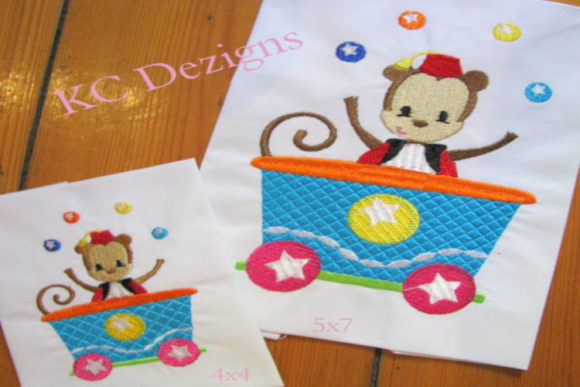
The initial appeal of the Monkey Sitting in Train design lies in its narrative charm. The description notes that it adds a fresh touch to any project, and visually, it delivers a sense of whimsical movement. Unlike static logos, this design tells a mini-story, which is incredibly valuable for brands aiming to appear approachable and friendly. While the product type is listed as Embroidery and the category is Boys, the aesthetic is not strictly gendered. It feels playful yet structured, making it suitable for a wide range of applications if styled correctly.
For a creative studio, a local bakery, or a pet brand, this imagery can soften a corporate identity. It suggests creativity, journey, and fun. However, from a technical standpoint, the complexity of a monkey figure combined with a train structure requires careful attention to detail. The design must balance the intricate lines of the train with the organic shapes of the animal to ensure clarity when stitched out.
Real-World Applications for Small Business Merch
When considering this digital embroidery file for your inventory, think beyond the standard t-shirt. Here is how I envision this design performing in real commercial scenarios:
- Embroidered Patches: This is perhaps the strongest use case. A patch allows you to control the background fabric and stabilizer completely. The Monkey Sitting in Train can serve as a collectible item for customers or a unique badge for staff uniforms. Patches also allow for higher stitch density without worrying about fabric puckering on lightweight garments.
- Tote Bag Design: Canvas tote bags are a staple for handmade shops and boutiques. The sturdy texture of canvas supports the weight of the embroidery well. Placing this design on the lower corner or center of a tote creates a high-value handmade product that customers love to carry, effectively turning them into walking billboards for your brand.
- Cap Embroidery: Using this on headwear requires caution. The curved surface of a cap front can distort detailed designs. If you choose this route, ensure the design is scaled appropriately so the train and monkey do not become unrecognizable blobs of thread. It works best as a side-panel accent rather than a full-front centerpiece.
- Apron Embroidery: For bakeries, florists, or craft studios, branded aprons are essential. This design adds a layer of personality to staff uniforms. It signals to customers that the business is family-friendly and creative. Ensure the placement is high on the bib to avoid interference with pockets or ties.
Technical Considerations and Stitch Density
One of the most critical aspects of using any embroidery file commercially is understanding its technical limits. The description mentions it is perfect for quilt blocks, which implies a certain level of detail. However, when moving from a quilt block to a small business merch item like a polo shirt or a baby onesie, you must evaluate the stitch density.
If the design has high stitch density, it may pull on lightweight fabrics, causing puckering. Always test the design on the exact fabric you intend to sell. For dark uniforms or navy caps, you must review thread colors carefully. A lack of contrast can make the details of the train and the monkey disappear. I recommend creating a printable mockup first to visualize how the colors interact before committing to production.
Additionally, consider the hoop size. You need to confirm that the design fits within your standard hoop capabilities without requiring re-hooping, which can lead to misalignment. If the design is large, ensure your machine can handle the continuous stitching without thread breaks, which are costly in terms of time and materials.
Brand Identity and Customer Trust
Your choice of design assets directly impacts your brand identity. Using a generic or poorly digitized design can undermine customer trust. Conversely, a well-executed Monkey Sitting in Train embroidery enhances perceived value. It shows attention to detail and a commitment to quality. For Etsy sellers and crafters, this differentiation is key. Customers are not just buying a hat or a bag; they are buying the craftsmanship.
Consistency is vital. If this design is part of a larger collection, ensure it shares visual DNA with your other design assets. Does it match the line weight? Do the color palettes complement your existing logo? Visual consistency builds recognition. When a customer sees that playful monkey on a tote, a patch, and a social media post, they begin to associate that feeling of joy with your brand.
Where to Use Caution
While versatile, this design is not a one-size-fits-all solution. Avoid using it on items that require frequent, harsh industrial washing unless you have tested its durability. Detailed outlines can fray over time if the stitch count is too low for the area covered. Also, be cautious with tiny lettering if the design includes any text elements; these often get lost in embroidery. If the design is intended for very small patches, simplify the color palette to reduce thread changes and potential bulk.
Furthermore, check the fabric texture. Highly textured fabrics like thick wool or loose knits can swallow small details. In these cases, a cut-away stabilizer is non-negotiable to provide a firm foundation for the stitches.
Practical Designer Notes for Production
Before launching this design as part of your small business merch line, follow these steps:
- Test in Black and White: Stitch the design out in monochrome first. This reveals the structural integrity of the digitizing without the distraction of color. If it looks good in black and white, it will look great in color.
- Check Commercial Licensing: The description states "THIS IS A MACH," likely referring to machine embroidery, but always confirm the license terms. Ensure you have the right to use the finished product for commercial sales.
- Create Client Mockups: If you are doing custom work, show the client a digital proof. Manage expectations regarding size and detail.
- Compare Assets: Place the Monkey Sitting in Train next to your other best-sellers. Does it fit? Does it elevate the collection?
In conclusion, the Monkey Sitting in Train is a charming addition to any embroidery library, particularly for those targeting families, creative industries, or boutique markets. By respecting the technical constraints of embroidery and strategically applying the design to appropriate products like patches and totes, you can create high-quality, profitable merchandise that strengthens your brand presence. Always prioritize testing and quality control to ensure every stitch reflects the professionalism of your business.